

Building a functional cure for autoimmunity


Discovery
Candidate
IND/CTA Enabling
Phase 1
Phase 2A
Phase 2b

Investigational antigen modulator for
axial spondyloarthritis (axSpA)
Mechanism of action: ERAP1 inhibition
First-in-class oral small molecule
Therapeutic aim: Develop a functional cure by erasing the inflammation-driving autoantigens
Once-daily oral tablet
Currently in Phase 1/2 (NCT07047703)
ERAP1 has strong genetic associations across autoimmunity

Well tolerated with no safety signals to date

Favorable pharmacokinetic properties and evidence of target engagement


Target the source
Despite the advent of biologics and targeted synthetic disease-modifying antirheumatic drugs, the treatment of inflammatory conditions like axial spondyloarthritis (axSpA) and many other autoimmune diseases remains challenging.
Current standard-of-care treatments, such as anti-TNF, anti-IL-17 and JAK inhibitors, leave a significant unmet need, with many patients failing to respond or experiencing loss of response over time.
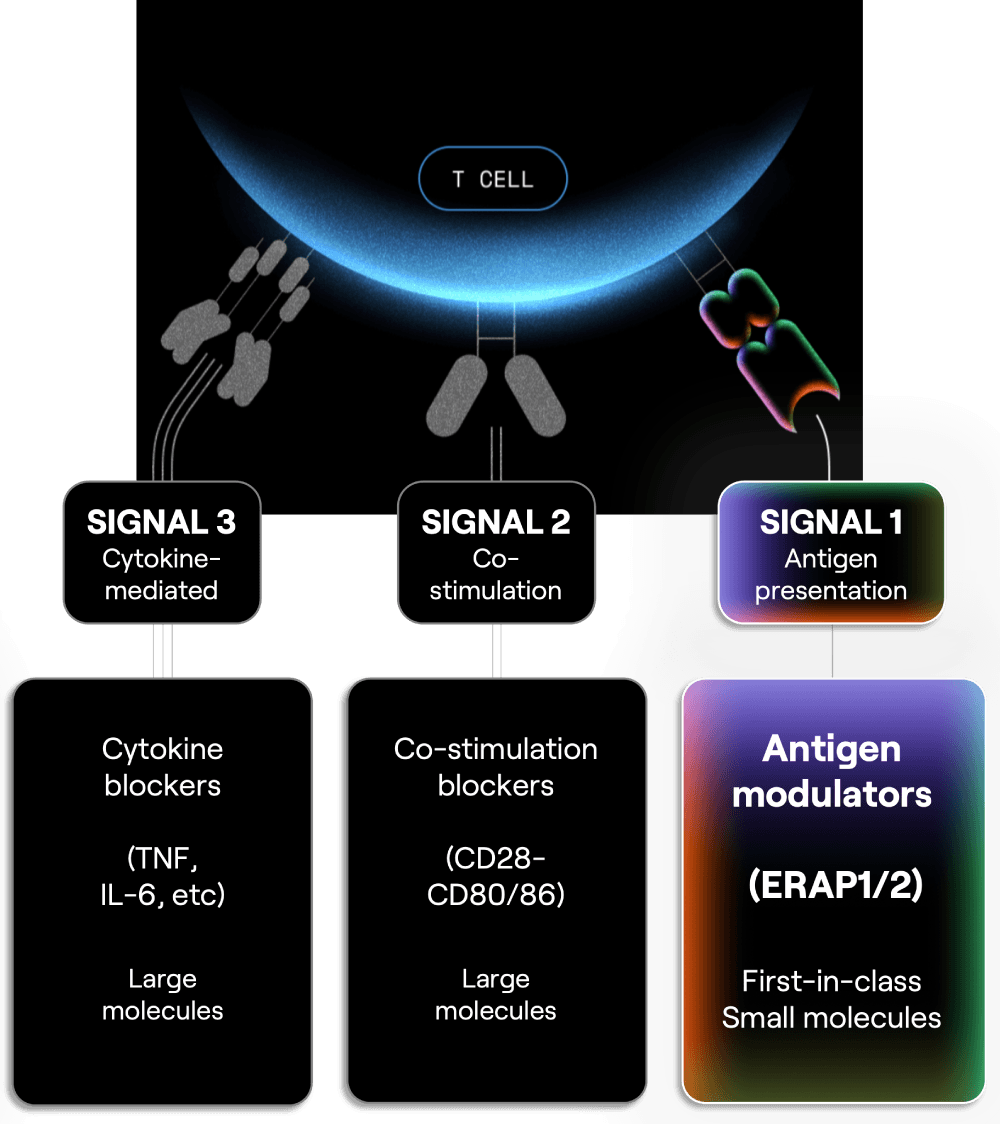
They act downstream of the adaptive immune response by targeting cytokines or immune pathways involved in Signals 2 and 3.
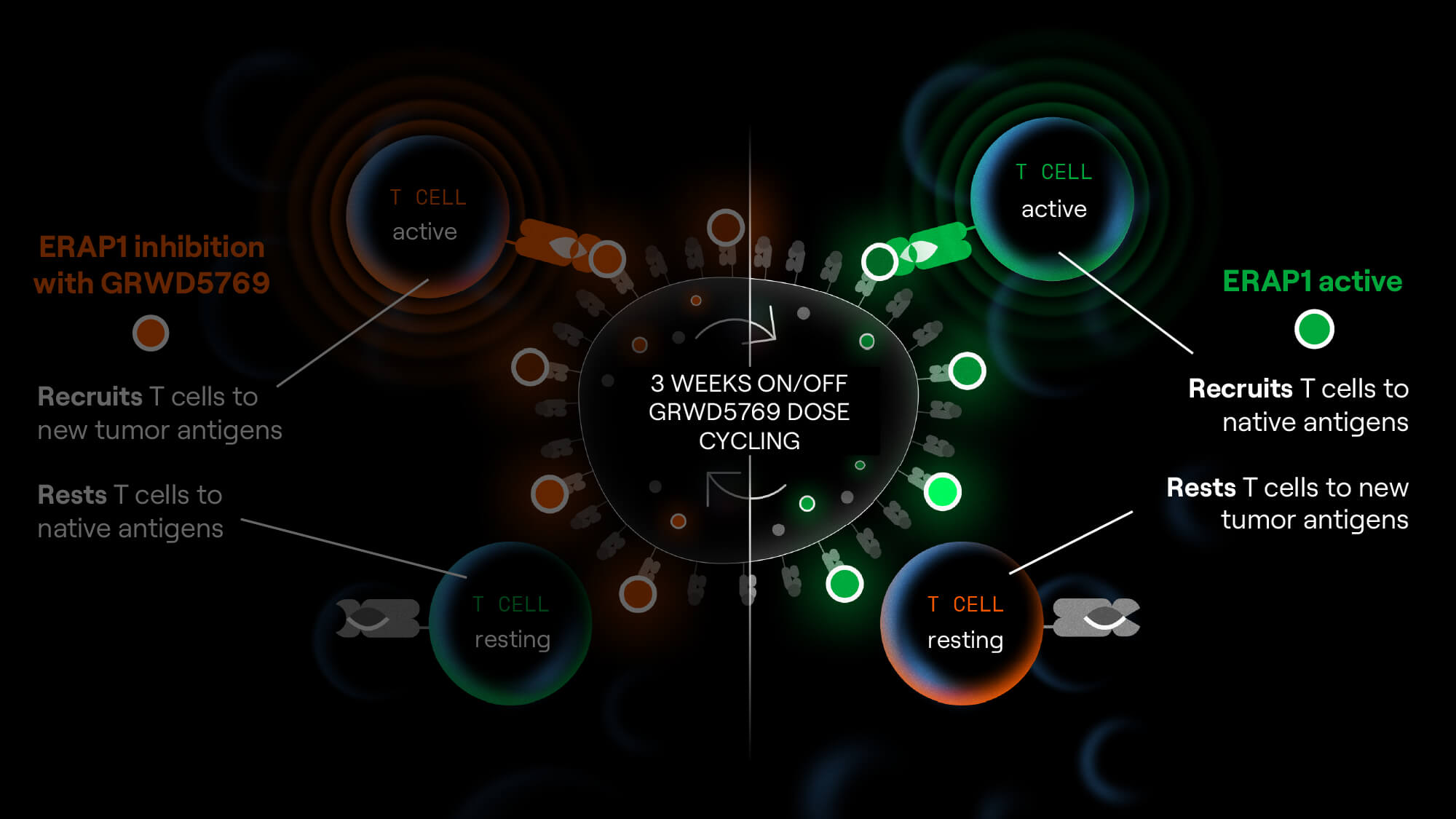
ERAP1 inhibition acts upstream of cytokine production and targets Signal 1 - antigen presentation - that shapes CD8+ T cell recognition and activation.
By modulating the upstream process, ERAP1 inhibition has the potential to address the underlying immune dysfunction driving autoimmune inflammation.
The opportunity
Studies* suggest that around two thirds of people living with axSpA do not achieve sustained disease control targets - such as remission or low disease activity.
Many autoimmune diseases have powerful genetic associations with specific HLA subtypes and ERAP1, particularly in axSpA, whereby gain of function alleles increase therisk of disease and reduced function alleles are protective from developing disease.
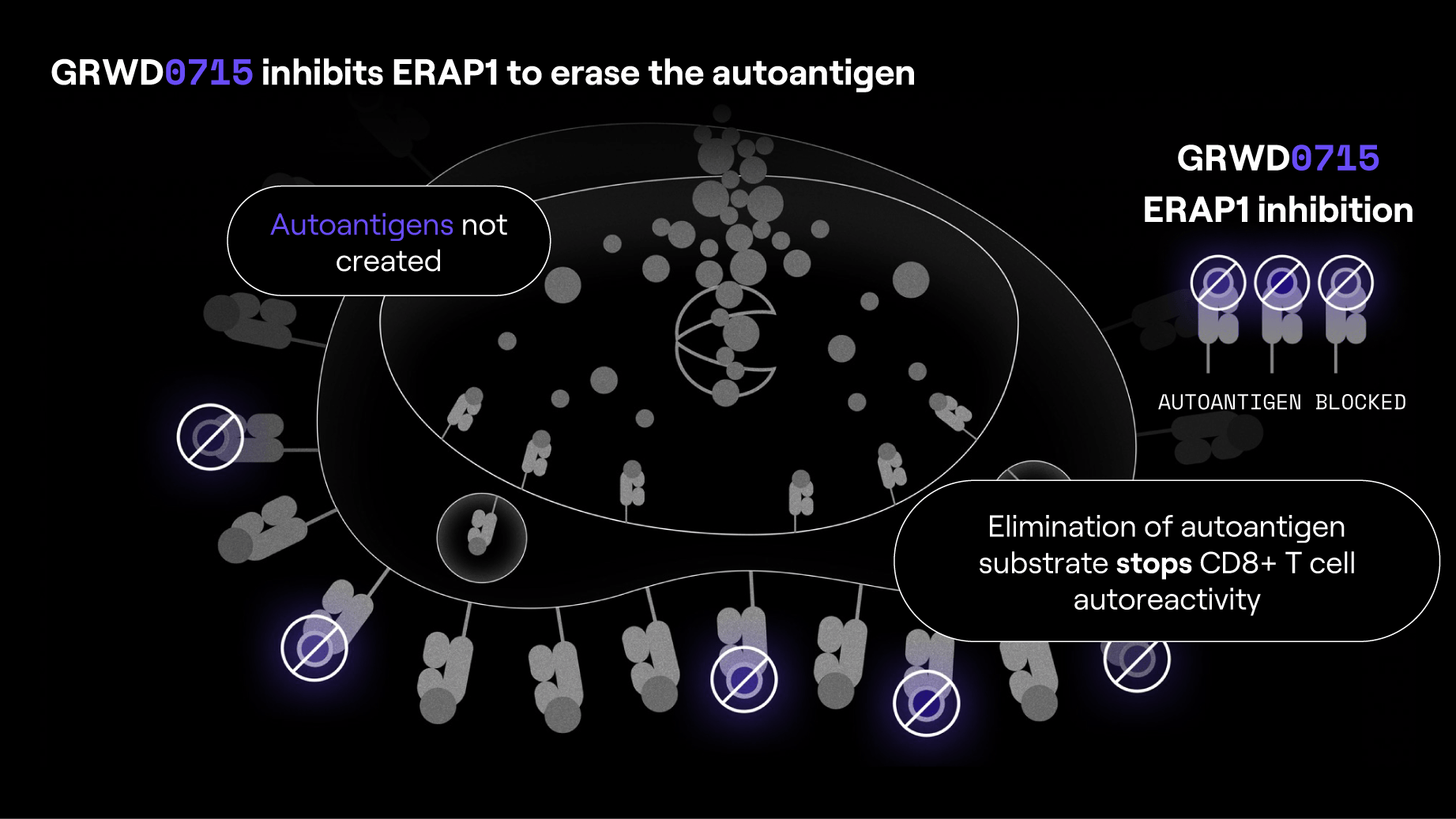
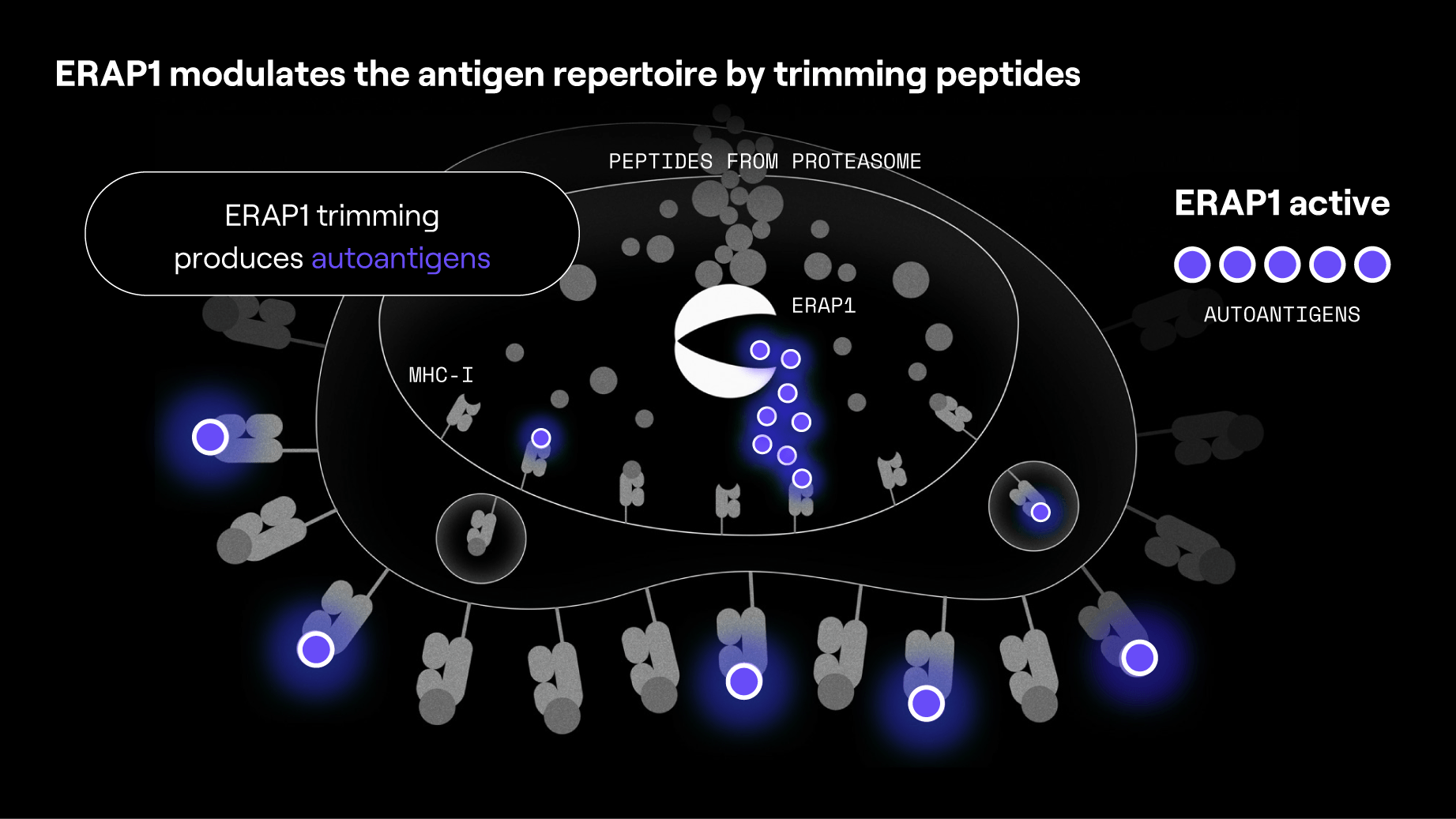
The underlying pathology is driven by aberrant cross-reactivity of CD8+ T cells with self (auto)-antigens, and ERAP1 is responsible for creating these autoantigens. The underlying pathology is driven by the abnormal processing and presentation of autoantigens.
By disrupting the presentation of these antigens, which trigger the inappropriate immune response, we aim to eliminate pathogenic T-cell activation and the resulting immune response against healthy tissues.
Inside the cell
ERAP1 OFF
ERAP1 ON
ERAP1 OFF
ERAP1 ON
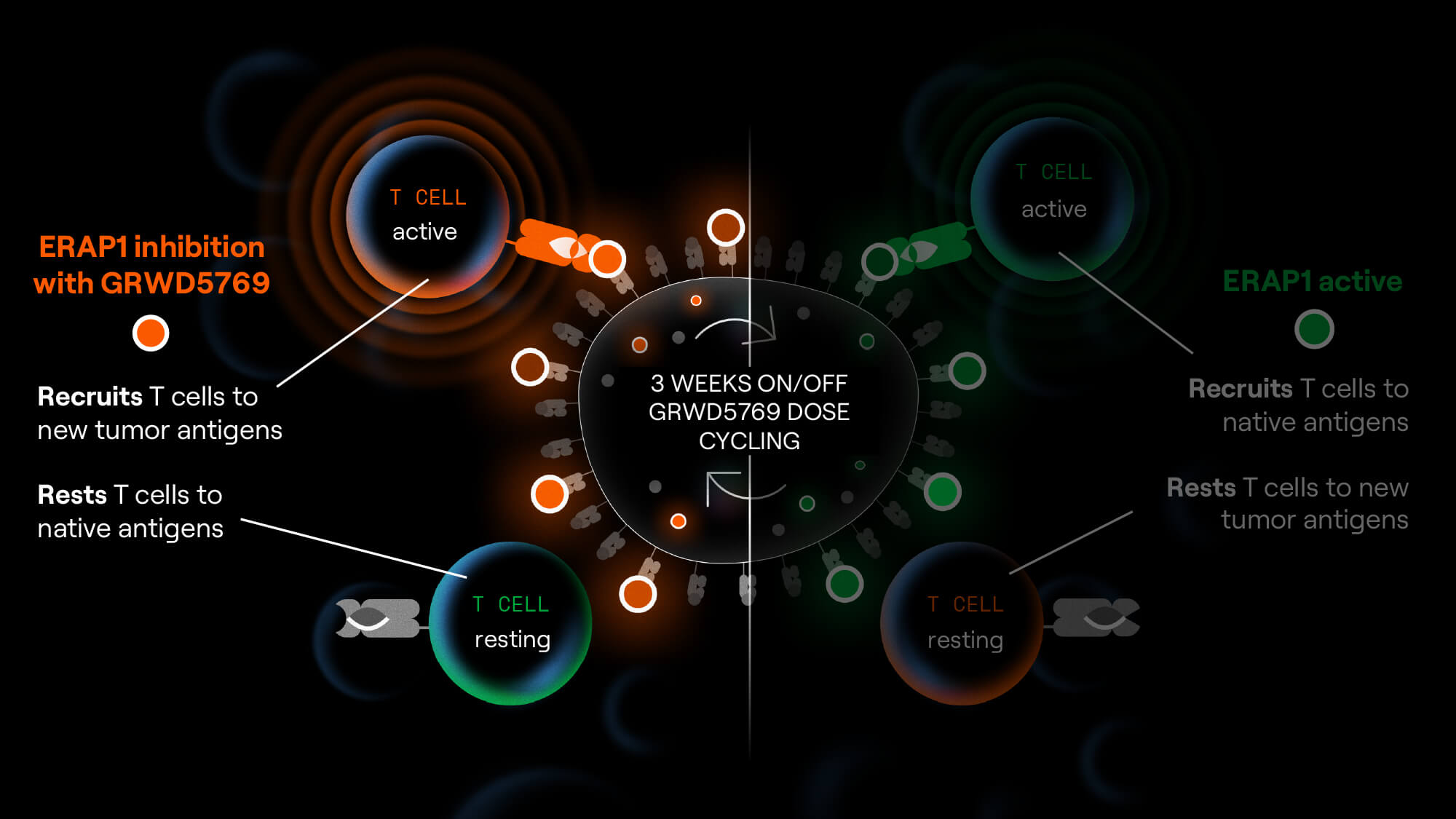
Speak to the team for more information



FAQs
Find answers to common questions to help you before reaching out.
What is GRWD0715?
GRWD0715 is a first-in-class, oral small molecule being developed by Greywolf Therapeutics as a novel treatment for autoimmune diseases. It is a selective, potent ERAP1 inhibitor designed to interrupt T cell activation by preventing the presentation of autoantigenic peptides on MHC class I molecules. Axial spondyloarthritis (axSpA) is the lead indication, with the potential to expand into other MHC-I-opathies.
How does GRWD0715 work?
GRWD0715 works by inhibiting ERAP1, the enzyme responsible for trimming peptide precursors to the 8-9 amino acid peptides for loading onto MHC class I molecules. In genetically predisposed individuals (especially those carrying HLA-B*27), this process generates autoantigenic self-peptides that drive self-reactive T cell activation and chronic inflammation. By inhibiting ERAP1, GRWD0715 aims to prevent these autoantigens from being generated — erasing the trigger for the autoimmune cascade at its source.
What is EAST-1?
EAST-1 (ERAP-inhibition in Axial Spondyloarthritis Trial - 1) is a multi-part, Phase1/2 study (NCT07047703) evaluating the safety, tolerability, and efficacy of GRWD0715 in healthy volunteers and participants with axial spondyloarthritis. The Phase 1 component enrolls up to 24 healthy volunteers and up to 36 people living with axSpA.
What stage of development is GRWD0715 in?
GRWD0715 is in Phase 1/2. The first healthy volunteer was dosed in August 2025, the Single Ascending Dose arm completed in March 2026, and the study is currently recruiting (as of August 2026).
What makes GRWD0715 different from existing therapies for axSpA?
Current approved treatments — including TNF inhibitors, IL-17 inhibitors, and JAK inhibitors — work by suppressing inflammatory mediators downstream of the immune trigger. They can be effective at managing symptoms but do not address the underlying cause. GRWD0715 aims to prevent the inflammation-causing autoantigens from being generated and presented in the first place, potentially offering a functional cure.
Could ERAP1 inhibition cause new autoimmune problems?
All 'self' peptides are already present in the body — ERAP1 inhibition alters the irrelative abundance rather than creating entirely new peptides. Peptides that appear at higher abundance following ERAP1 inhibition are therefore already thymically tolerized, meaning the immune system has been trained not to attack them.
What other indications could GRWD0715 address beyond axSpA?
The genetic associations between ERAP1 and disease risk extend across a range of autoimmune conditions. Greywolf Therapeutics is using large-scale genetic datasets — including through its strategic partnership with Genomics — to identify the strongest indications for ERAP1 inhibition. The platform has the potential to address a broad family of autoimmune diseases, including rheumatological disease and inflammatory bowel disease.
Will inhibiting ERAP1 be immunosuppressive?
No - ERAP1inhibition reshapes which antigens are presented — it doesn't reduce or stop antigen presentation. The result is a qualitatively different T-cell response, not a weaker one. In support of this, ERAP1/2 knockout humans and mice have fully intact immunity and clear viral challenges normally — the literature shows an altered T cell repertoire, not an impaired one. Additionally, over 200 patients dosed across our programs show no infection signal, no immune compromise, and a safety database consistent with the drug not being immunosuppressive.